
How Resilient are your Disaster Recovery Strategies?

In today’s technology-driven landscape, the importance of having an IT disaster recovery plan cannot be overstated. Organizations, regardless of size or industry, face a multitude of risks that can disrupt operations, compromise sensitive data, and lead to significant financial losses. A well-structured IT disaster recovery plan serves as a safety net, ensuring business continuity and minimizing downtime in the face of unforeseen events. This article delves into the critical elements of such a plan and explores various scenarios that underscore its necessity.

An IT disaster recovery plan is a comprehensive strategy designed to protect an organization’s IT infrastructure and data in the event of a disaster. Disasters can be natural, such as floods, hurricanes, and earthquakes, or man-made, including cyberattacks, equipment failures, and even human errors. The primary goal of a disaster recovery plan is to ensure that essential business functions can continue or be quickly resumed after an incident. In an era where operational disruptions can lead to catastrophic outcomes, having a detailed disaster recovery plan is not just optional; it is a vital aspect of risk management.

The first step in developing an effective IT disaster recovery plan is conducting a thorough risk assessment. This assessment involves identifying potential threats and vulnerabilities specific to the organization’s operations. For instance, a financial institution may face threats from cybercriminals targeting sensitive customer data, while a manufacturing company might be more concerned about equipment failures that halt production. Understanding these risks allows organizations to prioritize their recovery efforts and allocate resources effectively.

One of the most common scenarios necessitating a disaster recovery plan is a ransomware attack. In this situation, a malicious actor encrypts an organization’s data and demands a ransom for its release. Ransomware attacks have become increasingly sophisticated and prevalent, striking organizations across various sectors. With a robust disaster recovery plan, organizations can swiftly restore systems to a point prior to the attack, effectively mitigating the impact of the breach. This not only protects sensitive information but also preserves the organization’s reputation and customer trust. By implementing regular backups, organizations can ensure that they have a clean copy of their data, allowing them to avoid paying the ransom and quickly resume operations.

Another scenario involves natural disasters, such as hurricanes, floods, or earthquakes. These events can lead to significant physical damage to data centers and infrastructure, potentially resulting in prolonged downtime. A well-prepared organization, equipped with an off-site backup strategy, can seamlessly transition operations to an alternative location, ensuring that critical services remain available. This could involve cloud-based solutions that allow employees to access necessary data and applications from remote locations. The emotional and financial ramifications of extended downtime can be severe, but a proactive disaster recovery plan helps to alleviate these concerns. Moreover, organizations that have experienced natural disasters often report that having a disaster recovery plan in place not only facilitated their recovery but also improved their overall resilience to future challenges.

In addition to ransomware and natural disasters, equipment failure is a frequent occurrence that can disrupt IT operations. Whether due to hardware malfunctions, software glitches, or power outages, these failures can cripple an organization’s ability to function effectively. An IT disaster recovery plan includes regular backups and system redundancy, allowing businesses to recover swiftly from such incidents. For example, implementing a failover system can ensure that if one server goes down, another can take over without interruption. This preparedness instills confidence in employees and stakeholders alike, reinforcing the organization’s commitment to operational resilience.

Furthermore, data breaches, whether resulting from human error or malicious intent, highlight the necessity of a disaster recovery plan. Organizations must be prepared to respond to such incidents with clear protocols. This includes having a communication strategy in place to inform affected parties and regulatory bodies. A swift and organized response can mitigate potential legal repercussions and preserve customer relationships. Additionally, a comprehensive disaster recovery plan should incorporate regular training for staff, ensuring that everyone is aware of their roles and responsibilities in the event of a crisis. This proactive approach not only minimizes confusion during a disaster but also fosters a culture of preparedness within the organization.

Another critical aspect of an IT disaster recovery plan is the continuous evaluation and updating of the plan itself. Technology is constantly evolving, and so are the threats that organizations face. Regularly testing the disaster recovery plan through simulations and drills allows organizations to identify weaknesses and make necessary adjustments. This iterative process ensures that the plan remains relevant and effective in addressing emerging challenges. Moreover, involving key stakeholders in these evaluations fosters collaboration and strengthens the organization’s overall resilience.

In conclusion, the significance of having a robust IT disaster recovery plan cannot be ignored. By preparing for various scenarios, organizations can safeguard their operations against the unpredictable nature of disasters. From ransomware attacks to natural disasters, equipment failures, and data breaches, a comprehensive recovery strategy ensures business continuity and protects valuable data. In an age where technology is integral to success, investing in a disaster recovery plan is not just prudent; it is essential for long-term resilience and stability. Organizations that prioritize disaster recovery not only secure their operations but also strengthen their reputation and foster trust with clients and stakeholders. This commitment to preparation and recovery ultimately positions them for success in an increasingly uncertain world.
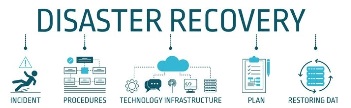
Essential IT Disaster Recovery Plan: Protect Your Business

An IT disaster recovery plan (DRP) is a comprehensive, documented strategy that outlines the procedures and processes necessary for an organization to recover and protect its information technology infrastructure in the event of a disaster. Disasters can take various forms, including natural calamities such as earthquakes, floods, and hurricanes, as well as man-made incidents such as cyberattacks, hardware failures, and human errors. The primary objective of a DRP is to ensure that critical business functions can continue or be swiftly resumed after an unexpected disruption, thereby limiting the impact on operations, finances, and reputation.

A robust disaster recovery plan typically encompasses several critical components. These include risk assessment, which identifies potential threats and vulnerabilities; business impact analysis (BIA), which evaluates the effects of disruptions on business operations; and the establishment of recovery point objectives (RPO) and recovery time objectives (RTO). RPO defines the maximum acceptable amount of data loss measured in time, while RTO indicates the maximum acceptable downtime following a disaster. Together, these metrics guide the organization in formulating effective recovery strategies.

The importance of an IT disaster recovery plan is multifaceted. First and foremost, it minimizes downtime, which can be financially devastating for businesses. According to various studies, the average cost of downtime can reach thousands to millions of dollars per hour, depending on the organization’s size and industry. Every minute of unplanned downtime can lead to significant losses in revenue and damage to an organization’s reputation. A well-crafted DRP enables a company to respond promptly to incidents, thus reducing the time it takes to recover operations and resume normal business activities.

Moreover, a disaster recovery plan is crucial for data protection. Organizations store vast amounts of sensitive data, including customer information, intellectual property, and proprietary business processes. Without a recovery plan in place, organizations risk losing critical information that could take years to reconstruct. This not only affects operational capabilities but could also lead to regulatory fines and legal repercussions, especially in industries that are heavily regulated, such as finance and healthcare. Ensuring data integrity and availability is a key component of business continuity, making the DRP an essential element of any organization’s overall risk management strategy.

In addition to minimizing downtime and protecting data, having a DRP instills confidence among stakeholders, including employees, customers, and investors. It demonstrates that the organization is prepared for unforeseen events and values the security of its assets and the continuity of its services. This assurance can enhance customer loyalty and strengthen the company’s market position. In a competitive business landscape, organizations that can quickly bounce back from disruptions are often viewed as more reliable and trustworthy than their counterparts.

Furthermore, the process of developing and maintaining a disaster recovery plan fosters a culture of preparedness within the organization. It encourages employees to think critically about potential risks and their roles in the recovery process. Regular training and simulation exercises can help ensure that staff members are familiar with the plan and can execute it effectively when necessary. This proactive approach not only improves organizational resilience but also empowers employees, enhancing their commitment to the organization’s mission and goals.

In conclusion, an IT disaster recovery plan is an essential component of any organization’s risk management strategy. It serves to protect critical business functions, safeguard data, and provide assurance to stakeholders, ultimately contributing to the organization’s resilience in the face of adversity. As businesses become increasingly reliant on technology, the significance of having a well-defined and regularly updated disaster recovery plan will only continue to grow. Organizations that prioritize disaster recovery planning are better positioned to navigate the complexities of the modern business environment and emerge from crises stronger than before.

Involving Private Sector for Providing Resources during Disasters

It can be seen that sometimes the emergencies leave the long lasting affects over the nations and people. It becomes very difficult for the nations to stand up again and struggle to get back their same position. These nations empty out the resources that they have in the form of finance and also every other kind of funds are also being used by these nations for the reconstruction process. In the times of emergency, it is also seen that the business and other activities are also stopped or decreased which also makes the people to have issued in earning their livelihood.

Hence during the emergency a number of risks are supposed to arise like unemployment, hunger, loss of shelter, diseases and so on. In order to meet and reconstruct all the destruction it is felt quite necessary that not only the government but private sector should also involve and help the people to struggle and rebuild their own lives. The private sector can provide its resources, funds and services for developing the mitigation strategies, risk reduction strategies, economy development strategies, human life development strategies, development and implementation of the protective and security measures.

All these activities are essential to have a support by the private sector so that the people do not have to face the emergency and if so then they can become able to cope up with this emergency. The private sector can play a great role in fulfilling the needs of the community as well as of the business. The private sector has also got the ability that it can provide a team of technical members who can deal with the situation. Also a team of doctors can also get arranged by the private sector for the treatment of the people who are affected. Donations and funds that are useful for the situation of after the emergency and also before the emergency can also be provided by the private sector. The private sector can play a role that is multifaceted as well as multi disciplinary. It must take part in helping to manage the situation. The general help tht can be provided by the private sector is given below:

  • It can help in explaining, assigning, and also deploying the role of institution that can be played in the emergency management.
  • It can help in training the people for teaching them that how they can effectively deal the risky conditions.
  • It can also help the institutes to arrange the training sessions and provide the institutes with the equipments and teams.
  • It can help in developing the programs that may support the organizations and people to develop the security measures.
  • It can also help in creating the awareness regarding the emergency among the public.
  • It can also provide the people with the information about the disasters, hazards and emergencies. The information providing is important as it will make the people to have an awareness before.

The above mentioned are the activities in which the private sector can help a lot in fighting with the emergencies and disasters. (Srinivas, n.d)

Conclusion

In the end it can be concluded that this study made an in depth exploration of the emergency management and its importance. The various responsibilities of the emergency management have been stated in this study which clarifies the need of emergency management for any society. The emergency management is required to be performed y the local or state government of the country. In this study, we have found out that how the governments can involve the private sector in the emergency management. It is an obvious fact that private sector can provide with a great deal of funds and resources. The various resources that can be provided by the private sector have also been given in this paper. As the private sector is financially a very strong sector, thus, it is recommended that in case of huge disasters the governments should involve the private sectors for improved resources.

References

Haddow, G. D. Bullock, J. A. Coppola, D. P. (2006). Introduction to emergency management. Published by Butterworth-Heinemann.

References

Haddow, G. D. Bullock, J. A. Coppola, D. P. (2006). Introduction to emergency management. Published by Butterworth-Heinemann.

About CrisisAlert Virtual Emergency Operations Center

CrisisAlert is a virtual emergency operations center designed to support emergency response, business continuity and crisis communications activities. By gathering the decision makers together and supplying them with the most current information, better decisions can be made. Many organizations have a designated primary EOC established at the main business facility but do not think about the worst case scenario.. Facility unavailable. This is where CrisisAlert differentiates itself by having a internet based virtual EOC that supports the following incident management functions:

Activation -Bring knowledge and expertise together to deal with events that threaten the business virtually

Situation Analysis -Gathering information to determine what is happening and to identify potential impacts by using Crisis Alert real-time bulletin boards and team workspace

Incident Briefing – Efficiently share information among team members

Incident Action Plan – Provide a single point for decision-making and decide on a course of action for the current situation

Resource Management – Provide a single point of contact to identify, procure and allocate resources

Incident Management -Monitor actions, capture event data and adjust strategies as needed.

Reid Renicker, CEM, CBCP

Preparing your crisis management team for responding to a terror event

Emergency response

Normally the CMT expects to be in control of the organizational response to a critical incident that directly affects the business continuity of the company and the business continuity plan should identify the most appropriate personnel to form that CMT response dependant on the skill set required to address the critical issues. For example, if the company has been affected by a cyber attack, then one would expect that the CMT response and the personnel with the required IT skills set to address the issue would be reasonably clear. However, if the incident is a terror event that involves a multi-agency response that directly involves the organization’s physical or personnel assets, or the business activities are contained within the geographical response cordon, then the CMT response may not be as clear.

Some considerations may include;

  • Has the organization/CMT undertaken any multi-agency training with the emergency services in response to a terror event?
  • Terror event emergency response, recovery and investigation timeframes can extend over days, weeks or months – does the CMT have the personnel and skillset ‘resilience’ to provide continued response and support to the multi-agency response? Emergency responders can rotate personnel over extended periods of response, does this apply to the CMT?
  • Like every profession the emergency services have their own language full of acronyms – if a CMT member attends a multi-agency briefing session, would they fully understand the content?
  • If attending such briefings what information should the CMT request and provide to the emergency responders, and who will be responsible for liaising with them?
  • Which elements of your organization’s response will be managed by the CMT and what elements can be discharged to staff outside the CMT response?
  • Who is responsible for the management of the business as usual (BAU) activities not directly affected by the incident?
  • Emergency responders may request access to company resources, such as personnel, physical resources, technical information relating to building systems, and their construction, architectural plans et al. Who will control the allocation of company resources and provide the requested information? Is this considered a  BAU or CMT role?
  • The dynamics of a terror incident are ever changing, has the CMT communications plan considered the information ‘feedback’ loop between the business CMT emergency room and that of the multi-agency tactical, operational and strategic response management arrangements and how this will be managed?

These are just some of the issues the organizations CMT will have to consider and action, during the emergency response phase, there are many others that cannot be considered fully within this article, suffice to say, preparation, planning and training is key. So, let’s move on to the recovery phase.

Recovery

Some risk managers may argue that the recovery phase, can be undertaken as a ‘business as usual’ activity, if the ‘crisis’ element is considered to be over, without completely understanding the demands that may be placed on the business from external sources in the aftermath of a terrorist attack

Would a BAU response be able to support and deliver on the expectations of the multi-agency recovery response? For example, depending on the numbers of injured or killed, a Disaster Victim Identification (DVI) response protocol may be required, that directly affects the business physical assets and dependant on the organizations business may involve DVI international coordination. Or closer to home, does the CMT have guidance within the business continuity plan on how to coordinate the response to employee’s being injured or killed during the terror event, particularly if they are not party to complete information on the status of any employees caught up in the incident in the early stages?

From an infrastructure and physical asset perspective, does the CMT appreciate the complexities of the reinstatement of premises that may have been structurally damaged by an IED or the bio-hazard contamination within the premises due to the injuries sustained by the victims? The recovery phase timeframe will be difficult for the CMT to establish as this will be partly determined by the complexity of the investigation required, potentially preventing access to business premises over an extended period with which they have no control.

Investigation

Although this element is third in my considerations, the investigation into the circumstances prior to, during and after the event, begins as soon as the attack happens. Therefore, as I have previously argued the business continuity plan should consider and react to changes in the country’s terror threat levels as a response ‘baseline’.

Additionally, the organization should ensure that all CMT members have been trained to undertake their expected role in response to a terror attack that directly affects the business, as the organizational response from the CMT may form a part of any external/internal investigation or enquiry. Some of the questions the CMT may consider asking themselves regarding their ability to take charge of their organizations response specifically to a terror attack are;

  • What will be your role within the CMT?
  • Are you relevantly trained to carry it out?
  • Do you have a clear plan and procedure to follow within the business continuity response plan?
  • Will you be able to obtain all the support and resources you may require, or may be requested of your organization?
  • Do you fully understand your role?
  • Is the role of the other CMT members clear?
  • Do you understand the key interoperability issues between your organization and the multi-agency response?
  • What preparation, planning and risk mitigation has been undertaken by the organization prior to the event?

The last bullet point above will be key, in terms of identifying the protective security arrangements that were in place within the organization, to try and prevent or mitigate the effects of a terror attack, some examples are: does the company train staff in recognising ‘hostile reconnaissance’ activities of their premises; what physical barriers are in place, such as x-ray scanners in mail rooms, hostile vehicle mitigation strategies etc. Business premises will have a fire evacuation plan to ensure staff can safely exit from the building; do they have a separate and distinct terror attack evacuation plan and does the organization, and more importantly the staff understand the key factors as to why they must be different?

And the list goes on! Finally let’s consider the business return to normality.

Return to normality

At some point the CMT must decide when it is appropriate to ‘stand down’ and hand over their remaining identified tasks to business as usual activities.

In doing so, they should consider the ongoing impact the terror event may have on the organization, from an investigation, enquiry and audit and review perspective with guidance being available within the closing sections of the business continuity response  to achieve the most appropriate transition. These processes will therefore impact on the return to normality, which in the case of a terror attack, the organization will have to accept, may take years!

As with all terror events, the preparation and response from all involved will be subject to ongoing scrutiny from an internal and external perspective, this can take many forms, from external police and security investigations, public enquiries, inquests et al, to the organizations internal audit and review processes.

The organization should have clear guidance within the business continuity plan on how to manage the information gathering, response and communication of the overall response within its normal audit and review processes, as part of the BAU activities, in support of the return to normality, however additional measures may be required dependant on the extent to which the business was involved and/or affected.

In addition, I would advise that the CMT should prepare for any scrutiny of their own performance during their response, from a personal and organizational perspective. A key point will be to ensure that any decisions made are recorded within a ‘decision log’, preferably by a trained ‘loggist’. The log should be a diary of events and decisions to show how a decision was arrived at, given the information available at the time.

They should also consider;

  • What they decided-was it an instruction or advised?
  • Why they made the decision
  • When they made the decision-time stamped
  • How they made the decision-depth and breadth of consultation
  • Was the decision unanimous or made by consensus
  • Where all decisions implemented and/or achieved-what was the follow-up process?
  • What audit and review process were undertaken?

Organizations may consider that the points I have raised are commonplace and addressed within their business continuity planning processes, and their CMT members are suitably qualified to deal with any critical incident the organization may face, I would for the most part agree. However, I believe the challenge they will have is ensuring that when their business is directly affected by a terror event that the business continuity process has assessed and considered the impact that a terror event will have, and the CMT have access to previously prepared tactical, operational and strategic response options to guide them through a critical event, that they have never faced before and therefore will not have the required experiential learning or training to support and enhance their decision making processes. That lack of experiential learning or training  presents a ‘risk’ to the organization that should be addressed through the  introduction of  a bespoke business continuity planning, preparation and training package for all staff, and in particular the CMT, specifically tailored to ensure a robust organizational response to a terrorist event that affects the business, in relation to the protection of assets and personnel, not forgetting customers, clients or members of the public resorting within the business premises.

The author

Richard Duncan, Dip NEBOSH, Tech IOSH, Dip Mgt(Open)

Richard currently runs his own business continuity and risk management consultancy firm, Richard Duncan Consultancy. He previously served for 27 years with Strathclyde Fire and Rescue and latterly with the Scottish Fire and Rescue Service (SFRS), gaining five promotions, retiring at the rank of Group Commander (Personnel, Training and Contingency Planning) in the role of Deputy Area Commander for East Renfrewshire, Renfrewshire and Inverclyde local council areas.

Richard has extensive experience in all aspects of business continuity and health and safety management.

Contact Richard at duncanr4@sky.com

4 Critical Backup and Disaster Recovery Questions to Ask Your Managed Services Provider

By Gary Cox Your company depends on technology to power everything from building security to payroll. While you see excellent productivity gains from a technology-forward infrastructure, you are vulnerable to any situation that takes out your systems. A rogue ex-employee could delete essential databases, a flood could knock out electricity to your data centre and […]

via 4 Critical Backup and Disaster Recovery Questions to Ask Your Managed Services Provider — GCComp. Computer Repair & Maintenance